She wasn’t the kind of person who made noise.
No grand entrances. No speeches. No need to be seen. If you knew her at all, it was because she showed up in small, steady ways that didn’t ask for credit.
Which is why what happened still doesn’t make sense to the people who live there.
On an ordinary winter morning, in a neighborhood that prides itself on familiarity, something broke the rhythm. Sirens. Confusion. A stretch of road suddenly crowded with strangers and flashing lights.
By the afternoon, nothing felt ordinary anymore.
Neighbors say the hardest part wasn’t just the shock. It was the disbelief. The feeling that the wrong life had been pulled into the wrong moment.
This wasn’t someone who chased trouble.
This wasn’t someone looking for confrontation.
This was someone who belonged.
People remember her as the woman who checked in. The one who noticed when you seemed off. The parent you’d see at school drop-off, exchanging tired smiles and small talk about weather and kids.
The kind of presence you don’t fully appreciate until it’s gone.
She loved words. Always had.
Long before motherhood filled her days, she studied creative writing. Poetry came naturally to her — not for applause, but because it helped her make sense of things. Friends say she never stopped thinking in language, even when life got busy.
Music mattered too. So did faith. So did the quiet satisfaction of building a home that felt safe.
In recent years, she chose something that rarely gets praised out loud: staying close. Focusing on her children. Letting routines become anchors instead of limitations.
School mornings. Meals. Homework. Bedtime stories.
She wasn’t known for politics. Or arguments. Or being loud about anything at all.
Warmth was her currency.
That’s why January 7, 2026, still feels unreal to the people who loved her.
That morning followed a pattern she knew well. A school drop-off. A drive home. The kind of routine that lulls you into thinking nothing unexpected could possibly happen.
But something was different that day.
Residents had already noticed more law enforcement in the area. Vehicles near the school. A presence that felt heavier than usual, though no one imagined what it would lead to.
What happened next has been described in fragments.
A brief encounter. Raised voices. Movement. Fear. Then chaos.
Details vary. Investigations are ongoing. Officials are still sorting timelines and responsibility.
What doesn’t vary is the ending.
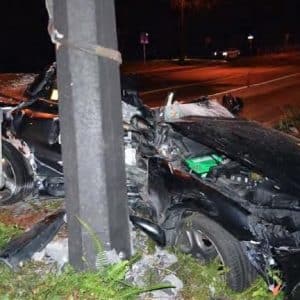
A crash. Severe injuries. A life that didn’t make it home.
Witnesses talk about confusion — about not understanding what they were seeing. About neighbors running toward the scene instead of away from it. About parents clutching children closer than usual.
The kind of shock that lingers in your body long after the street clears.
As the hours turned into days, grief spread outward. From family to neighbors. From friends to strangers who had only known her face.
Vigils appeared quietly. Flowers. Notes. Handwritten messages taped to poles and fences.
People shared stories that felt almost too small to matter — and that’s what made them devastating.
A conversation on the sidewalk.
A laugh at pickup.
A moment of kindness that seemed insignificant at the time.
And then, finally, her name began to circulate beyond the block.
Renee Nicole Good.
She was 37 years old.
A mother of three.
Someone whose life was shaped far more by creativity and care than by conflict.
Those closest to her struggle with the contrast. The person they knew versus the way the world now knows her. The reduction of a full life into a single moment that refuses to explain itself.
They talk about disbelief more than anger. About trying to hold onto who she was without being consumed by how she died.
There’s frustration too — but it’s quiet.
Because debates are happening far away now. On screens. In offices. In places that never saw her wave from a driveway or sit cross-legged reading with her kids.
For her community, the focus keeps circling back to the same thing.
Absence.
The empty space at school pickup.
The house that feels too still.
The routines that no longer include her voice.
Loved ones say she found meaning in the everyday. That she didn’t chase big stages because she didn’t need them. That raising her children felt like enough.
Now, those children are at the center of everything.
Neighbors are stepping in. Meals being dropped off. Rides offered. Quiet support that mirrors the way she lived.
There’s no neat way to grieve someone like this.
Especially when the story around their death keeps evolving, changing, pulling attention away from the person at the center of it.
Many who knew her are asking the same unspoken question:
How does something so ordinary turn into something so final?
There are no answers yet. Maybe there never will be ones that feel sufficient.
What remains are memories that refuse to shrink. A creative spirit. A mother’s devotion. A neighbor’s kindness that didn’t ask to be remembered — but is now impossible to forget.
The street looks the same. The school still opens every morning. Life, unfairly, keeps moving.
And yet, everything feels slightly off.
As if the neighborhood itself is still adjusting, still waiting, still trying to understand how someone so rooted could be gone so suddenly.
People say her legacy isn’t about that day. It’s about everything before it.
And maybe that’s the only place grief can rest for now.
In the stories still being told.
In the children still growing.
In the quiet spaces where she once stood — and somehow still does.