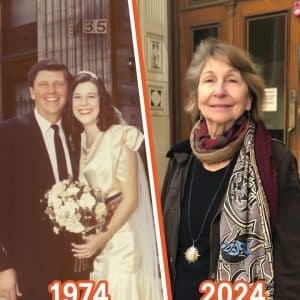
Somewhere between memory and motion, there are still people walking around who remember how it all felt when everything was new.
Not reading about it.
Not watching a clip online.
Actually being there.
And that alone is strange, isn’t it?
Because we tend to think of history as finished. Wrapped up. Filed away. Something you scroll past, not something that might be standing in line next to you at the pharmacy.
Yet there they are.
You can trace entire cultural revolutions just by following the arc of their lives. Before fame was loud. Before cameras were light. Before audiences expected perfection instead of truth.
That realization lands quietly at first.
Then it hits harder than expected.
They didn’t just witness change — they carried it. On their backs. In their voices. In the way they learned, unlearned, and adapted when the world demanded something new every decade.
Imagine starting out when stages were small and smoky, when microphones barely worked, when applause felt personal because it was.
Now imagine still being here after everything sped up, digitized, filtered, and rebranded.
That gap alone feels impossible.
And yet… they crossed it.
What’s wild is how little they talk about it. No dramatic speeches. No victory laps. Just a quiet awareness that they’ve lived through multiple versions of the same dream — and watched each one fade into the next.
There’s a tenderness in that.
And a little irony, too.
Because fame was never supposed to last this long.
At some point, the spotlight shifted. New faces arrived. New rules. New definitions of success. And instead of chasing relevance like a lifeline, many of them stepped sideways.
That choice says more than any award ever could.
Some became teachers without the title.
Some became protectors of stories that almost disappeared.
Some simply learned how to say “no” — a skill they were never taught when everything was “yes or nothing.”
That’s when the real transformation happened.
Not onstage. Not on screen.
But in the quiet decisions no one was filming.
There’s something deeply human about watching someone let go of center stage without letting go of purpose. It’s not resignation. It’s calibration.
And honestly? That’s rare.
We don’t talk enough about what it costs to stay curious after decades of being told who you are. Or how strange it must feel to watch younger generations discover your work like it’s new… without knowing the nights it took to survive making it.
That gap can sting.
But for many of them, it didn’t turn into bitterness. It turned into patience.
They began to protect the craft instead of chasing applause. To guide instead of dominate. To show up selectively, intentionally — like someone who knows the power of silence because they’ve lived through enough noise.
There’s a moment when you realize this isn’t about nostalgia anymore.
It’s about continuity.
These are the oldest living stars of 2025 — and that phrase alone feels unreal when you sit with it long enough. Not because of their age, but because of what they’ve outlasted.
Entire industries rose and collapsed around them.
Trends burned hot and vanished.
Formats came and went.
They remained.
Not frozen in time. Not stuck in the past. But quietly evolving, even when no one was watching closely.
That’s the part that doesn’t get enough attention.
They adapted without erasing themselves.
They changed without betraying the core of what made them artists in the first place.
And that balance? It’s harder than it looks.
Some of them still perform — sparingly, carefully, almost like a gift instead of an obligation. Others have redirected their energy into preservation, advocacy, or education. Not because they had to… but because they wanted the work to mean something beyond them.
There’s humility in that. And a kind of wisdom you can’t fake.
It makes you wonder what success really is, once the noise fades. Is it longevity? Influence? Survival? Or simply staying honest with yourself long enough to recognize when it’s time to reinvent?
They’ve answered that question differently — and that’s what makes it fascinating.
You can hear it in interviews when they pause longer than expected. When they smile at memories that don’t translate easily into sound bites. When they talk less about fame and more about moments — small, almost forgettable moments — that somehow shaped everything.
That’s when you realize: they’re still processing it, too.
Their stories aren’t closed books. They’re living drafts.
And maybe that’s why their presence still matters so much. Not because they represent a “golden age,” but because they prove that growth doesn’t have an expiration date.
That relevance isn’t loud.
That legacy isn’t static.
That art doesn’t retire — it just changes form.
There’s comfort in knowing that a life spent creating doesn’t suddenly become complete. That even after decades, there’s room for curiosity, for doubt, for discovery.
For being unfinished.
And as time keeps moving — faster than ever — they remain quiet reminders that the emotional core of storytelling hasn’t changed. It still comes down to honesty. Connection. Risk.
Those things don’t age.
So when you think you’ve seen it all, or that the story is over, remember this: some of the people who helped write the earliest chapters are still here.
Still watching.
Still shaping.
Still becoming.
And they’re not done yet — even if they don’t say it out loud.