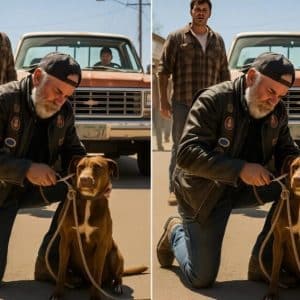
It was supposed to be a quiet drive. Just a father, a son, and a plan—a plan to get help.
But the moment the car pulled onto the main road, it all spun out of control.
The son, barely holding himself together, grabbed the phone from his father’s hand and dialed 911.
“I’ve been kidnapped!” he shouted into the receiver. Panic and anger rolled off his words like waves.
Within minutes, a patrol car appeared. Officer Mike Carpinelli stepped out, taking in the scene. Two people, tense, in the middle of the road.
He could feel the chaos before he even spoke.
But instead of shouting or pulling out his handcuffs, he did something unexpected. He walked slowly toward the car, hands open, calm, listening.
“Hey, let’s talk,” he said gently. “What’s going on here?”
The young man’s voice wavered. He insisted he didn’t have a problem. He said his father was wrong, that he didn’t need rehab. His chest heaved with fear and defiance all at once.
And Officer Carpinelli listened. Really listened.
He didn’t argue. He didn’t judge. He told stories—real stories of people who had faced the same fight, the same fear, the same anger. He reminded the young man that admitting the problem wasn’t weakness. That asking for help didn’t make him a failure.
Hours—or maybe minutes, it’s hard to tell in moments like that—passed in the middle of the quiet street.
Then, slowly, the son’s shoulders relaxed. A crack in the armor.
“I’ll go… but only if you come with me,” he said finally, voice almost a whisper.
No sirens. No flashing lights. Just Officer Carpinelli, nodding, understanding that sometimes hope comes quietly.
The ride to the rehab facility was silent, except for the occasional story, the occasional word of encouragement. Each mile, the tension eased just a little.
When they arrived, Officer Carpinelli didn’t drop him off and drive away. He walked him inside, made sure the staff knew he was scared, that he needed support. He stayed until the young man felt, at least for a moment, safe.
The father watched from the parking lot, heart still pounding, unsure what the next step would bring.
Inside, there were no guarantees. Addiction doesn’t surrender overnight. But there was something bigger happening—a bridge had been built. Trust had been earned. And sometimes, that’s the first victory.
No one knows what happened after that day, not really. Did the young man fight through the cravings, the doubts, the shame? Did he find strength in himself, in the people who refused to give up on him?
We don’t know for certain.
But there’s something powerful in the image: a father, desperate; a son, broken; and a stranger who chose empathy over judgment. Someone who didn’t see a criminal, or a problem, or a lost cause. Just a human being who needed to be seen.
Sometimes, that’s all it takes. One moment of patience. One act of kindness. One person willing to step into someone else’s storm.
And maybe, just maybe, that’s enough to start a new story—one that begins not in fear, but with the quiet, stubborn courage to care.